Europe’s beverage industry has long been one of the continent’s most resilient consumer sectors, supported by a diverse retail landscape, advanced logistics infrastructure, and consistent demand across households, hospitality businesses, supermarkets, and food service operators. While consumer preferences continue to evolve, beverages remain essential products with steady purchasing cycles, making wholesale distribution an attractive business opportunity for investors, entrepreneurs, importers, and distributors alike.
In recent years, several factors have strengthened the wholesale beverage market. Cross-border trade within Europe has become increasingly efficient, digital procurement has simplified sourcing, and retailers are seeking dependable suppliers capable of delivering a wide range of products quickly and consistently. At the same time, international buyers continue to source globally recognized beverage brands from European wholesalers to serve both domestic and export markets.
Unlike industries driven by seasonal demand alone, the beverage sector benefits from year-round consumption. Carbonated soft drinks, bottled water, juices, energy drinks, sports beverages, and ready-to-drink products generate repeat purchases across virtually every demographic. This predictable demand creates opportunities for businesses operating throughout the supply chain—from manufacturers and wholesalers to logistics providers and retailers.
For companies considering expansion into wholesale distribution, understanding the market’s growth drivers is essential. The most successful businesses are not simply responding to current demand; they are positioning themselves to benefit from long-term changes in consumer behavior, supply chain innovation, and international trade.
This article explores why Europe’s beverage wholesale market continues to attract business investment, the factors driving its growth, the opportunities available to distributors and importers, and the strategies businesses can adopt to remain competitive in an increasingly sophisticated marketplace.
Europe’s Beverage Industry Remains a Stable Commercial Sector
Consumer goods markets often experience fluctuations driven by economic conditions, changing lifestyles, and technological disruption. The beverage industry, however, has demonstrated remarkable resilience due to the consistent nature of consumer demand.
Across Europe, beverages are purchased daily by:
- Supermarkets
- Convenience stores
- Wholesalers
- Restaurants
- Hotels
- Cafés
- Event venues
- Vending operators
- Online retailers
This broad customer base provides wholesalers with access to multiple revenue channels rather than relying on a single market segment.
Another advantage of beverage wholesale lies in product diversity. A modern distributor may supply carbonated soft drinks, bottled water, juices, energy drinks, flavored beverages, and specialty products within the same purchasing relationship. This diversification helps reduce business risk while allowing distributors to respond to changing consumer preferences.
As European retail networks continue expanding and cross-border commerce becomes more efficient, wholesale suppliers play an increasingly important role in connecting manufacturers with commercial buyers throughout the region.
Why Investors Continue Watching the Beverage Wholesale Industry
From an investment perspective, wholesale beverage distribution offers several characteristics associated with stable long-term business growth.
Unlike discretionary luxury purchases, beverages are fast-moving consumer goods (FMCG) that generate recurring sales. Retailers replenish inventory frequently, creating predictable purchasing cycles and ongoing demand throughout the year.
Several structural factors contribute to the industry’s attractiveness:
- Consistent consumer demand
- Established global beverage brands
- Mature European logistics networks
- Efficient cross-border trade
- High product turnover
- Diverse customer segments
- Opportunities for operational scalability
Rather than depending solely on consumer marketing, wholesalers generate value by improving procurement efficiency, inventory management, transportation coordination, and customer service.
Businesses that optimize these operational areas often strengthen profitability while building long-term commercial relationships with retailers and distributors.
Growth Driver 1: Cross-Border Trade Is Expanding Market Opportunities
One of Europe’s greatest commercial strengths is its interconnected marketplace.
The European Single Market enables businesses to move goods across member states with fewer trade barriers than many other global regions. For beverage wholesalers, this creates significant opportunities to serve customers beyond their domestic markets.
Importers and distributors increasingly source products from suppliers located elsewhere in Europe to access:
- Broader product selections
- Competitive purchasing options
- Reliable inventory availability
- Consolidated logistics services
- Efficient transportation networks
Cross-border sourcing also enables retailers to diversify product offerings without establishing relationships with numerous manufacturers individually.
As logistics infrastructure continues improving throughout Europe, cross-border beverage distribution is expected to remain an important contributor to wholesale market growth.
Growth Driver 2: Retail Consolidation Is Increasing Wholesale Demand
The European retail landscape continues evolving.
Large supermarket chains, convenience store networks, hospitality groups, and wholesale buying organizations increasingly centralize procurement activities to improve purchasing efficiency.
Rather than negotiating with numerous manufacturers separately, many retailers now prefer working with experienced wholesalers capable of supplying multiple brands, formats, and beverage categories through a single commercial relationship.
This approach offers several operational advantages:
- Reduced procurement complexity
- Consolidated shipments
- Simplified invoicing
- Greater purchasing flexibility
- Improved inventory planning
- Faster replenishment
For wholesalers, these changing procurement preferences create opportunities to deliver value beyond competitive pricing by offering dependable logistics, consistent stock availability, and efficient customer support.
Growth Driver 3: Product Diversification Is Creating New Revenue Opportunities
Consumer tastes continue evolving across Europe, expanding demand beyond traditional carbonated soft drinks.
Retailers increasingly seek wholesalers capable of supplying diverse beverage portfolios that include:
- Carbonated soft drinks
- Sparkling beverages
- Energy drinks
- Bottled water
- Fruit juices
- Functional beverages
- Sports drinks
- Ready-to-drink teas
- Low- and no-sugar alternatives
For distributors, product diversification reduces dependence on individual categories while creating opportunities to increase average order values through broader purchasing options.
Businesses offering comprehensive beverage portfolios are often better positioned to adapt as consumer preferences continue changing.
Growth Driver 4: Digital Procurement Is Transforming Beverage Wholesale
Digital transformation has become one of the most significant forces shaping Europe’s wholesale beverage market. Purchasing decisions that once relied on phone calls, spreadsheets, and manual documentation are increasingly managed through integrated digital procurement systems.
Modern wholesale operations use technology to streamline every stage of the purchasing process, from inventory monitoring to delivery confirmation.
Key digital capabilities include:
- Real-time inventory visibility
- Online quotation management
- Electronic purchase orders
- Shipment tracking
- Warehouse management systems
- Demand forecasting
- Digital invoicing
These technologies improve operational efficiency while reducing administrative costs and minimizing human error.
For distributors, digital procurement also enhances customer service. Retailers benefit from faster responses, greater pricing transparency, and improved communication throughout the order lifecycle.
Businesses investing in digital infrastructure are often better positioned to scale operations as demand grows across multiple European markets.
Growth Driver 5: Supply Chain Reliability Has Become a Competitive Differentiator
In wholesale distribution, reliability often influences purchasing decisions as much as price.
Retailers depend on consistent deliveries to maintain stock availability and meet customer demand. Delays, incomplete shipments, or inaccurate documentation can disrupt inventory planning and affect sales performance.
As a result, buyers increasingly evaluate wholesale partners based on operational consistency rather than simply the lowest quotation.
Key characteristics of reliable wholesalers include:
- Consistent product availability
- Accurate order fulfillment
- Predictable delivery schedules
- Professional export documentation
- Responsive customer support
- Strong logistics coordination
For businesses serving multiple countries, dependable supply chains also reduce operational risk by improving planning accuracy and minimizing unexpected disruptions.
Companies that consistently deliver on their commitments often build long-term commercial relationships that extend well beyond individual transactions.
Growth Driver 6: Sustainability Is Influencing Commercial Purchasing Decisions
Environmental responsibility has become an increasingly important consideration throughout Europe’s beverage industry.
Retailers, hospitality businesses, and procurement teams are paying closer attention to how products are packaged, transported, and distributed.
Wholesale businesses are responding by adopting practices that improve operational efficiency while reducing environmental impact.
Examples include:
- Increased use of recyclable packaging
- Lightweight packaging designs
- More efficient route planning
- Consolidated deliveries
- Reduced warehouse energy consumption
- Improved pallet utilization
These initiatives often generate operational savings alongside environmental benefits.
Efficient transportation planning, for example, reduces fuel consumption while allowing distributors to optimize vehicle capacity and lower freight costs.
As sustainability expectations continue evolving, businesses that integrate responsible practices into their operations may strengthen relationships with customers seeking environmentally conscious supply partners.
Opportunities for Importers and Distributors
Europe’s expanding beverage market presents opportunities for businesses operating at every stage of the wholesale supply chain.
Importers benefit from access to internationally recognized beverage brands, while distributors can expand product portfolios to meet increasingly diverse retailer demand.
Several trends continue creating commercial opportunities.
Broader Product Portfolios
Retailers increasingly prefer purchasing multiple beverage categories from fewer suppliers.
This creates opportunities for wholesalers capable of supplying:
- Carbonated soft drinks
- Bottled water
- Energy drinks
- Fruit beverages
- Functional drinks
- Ready-to-drink products
Offering broader product selections simplifies procurement for customers while increasing average order values.
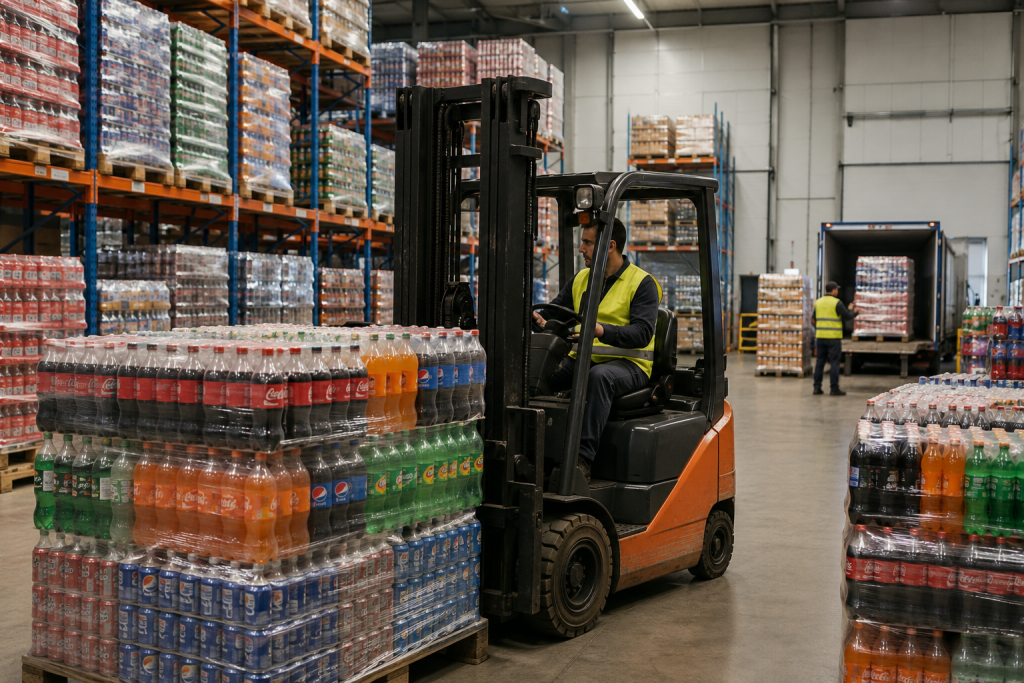
Mixed Pallet Purchasing
Mixed pallet distribution has become an increasingly popular purchasing strategy.
Instead of ordering large quantities of a single beverage, retailers can combine multiple brands, package sizes, and flavors within one shipment.
Benefits include:
- Improved inventory flexibility
- Lower inventory risk
- Better warehouse utilization
- Faster product testing
- Reduced capital tied up in stock
For wholesalers, mixed pallet solutions provide additional value by helping customers manage inventory more efficiently.
Expanding International Markets
Many wholesalers are no longer limited to serving domestic customers.
Cross-border logistics networks enable distributors to supply retailers, importers, hospitality businesses, and wholesale buyers throughout Europe and beyond.
International expansion provides opportunities to:
- Diversify customer bases
- Increase purchasing volumes
- Improve economies of scale
- Strengthen supplier relationships
As transportation infrastructure and trade networks continue improving, international wholesale distribution is expected to remain an important source of business growth.
Choosing the Right Wholesale Beverage Partner
Selecting a wholesale supplier is a strategic business decision that extends beyond product pricing.
Reliable partners contribute to operational efficiency by supporting inventory planning, logistics coordination, and consistent product availability.
Businesses evaluating wholesale suppliers should consider:
- Product range
- Inventory capacity
- Export experience
- Delivery performance
- Commercial documentation
- Customer support
- Logistics capabilities
- Long-term reliability
Companies sourcing beverages across multiple European markets often benefit from working with an experienced European beverage wholesale supplier such as Juicy GmbH, whose expertise in cross-border beverage sourcing, mixed pallet solutions, and B2B distribution helps importers, wholesalers, and retailers streamline procurement while maintaining reliable supply chains.
Strong supplier relationships reduce operational uncertainty and provide businesses with greater flexibility as market conditions evolve.
Traditional Procurement vs. Modern Beverage Wholesale
| Business Area | Traditional Procurement | Modern Wholesale Strategy |
| Supplier Network | Multiple individual manufacturers | Consolidated wholesale partner |
| Ordering | Manual purchasing | Digital procurement platforms |
| Inventory Planning | Reactive | Forecast-driven |
| Product Selection | Limited categories | Multi-brand, multi-category portfolios |
| Logistics | Separate deliveries | Consolidated shipments and mixed pallets |
| Market Reach | Domestic focus | Cross-border European distribution |
| Decision Making | Experience-based | Analytics and real-time data |
| Customer Service | Transactional | Long-term partnership approach |
Modern wholesale models allow businesses to improve efficiency while responding more effectively to changing customer expectations.
Why Long-Term Market Awareness Creates Competitive Advantage
The European beverage industry continues evolving through advances in logistics, technology, sustainability, and consumer demand.
Businesses that closely monitor market developments are better equipped to identify emerging opportunities, adapt procurement strategies, and strengthen commercial relationships.
Rather than reacting to short-term market changes, successful wholesalers build resilient business models based on operational efficiency, diversified product portfolios, and reliable supplier partnerships.
Companies that embrace innovation while maintaining consistent service standards are likely to remain competitive as the wholesale beverage market continues expanding.
Conclusion
Europe’s beverage wholesale market continues to demonstrate the characteristics that make it an attractive sector for long-term business investment. Stable consumer demand, efficient logistics infrastructure, cross-border trade, and a mature retail environment provide a strong foundation for sustained growth.
However, the industry’s future will not be defined solely by increasing consumption. Competitive advantage will increasingly depend on operational excellence, digital procurement capabilities, supply chain resilience, and the ability to respond quickly to changing retailer and consumer expectations.
Businesses that embrace modern wholesale strategies—including diversified product portfolios, mixed pallet distribution, data-driven inventory management, and long-term supplier partnerships—are likely to strengthen their market position while improving operational efficiency.
At the same time, importers and distributors that prioritize reliable sourcing, sustainable logistics, and strategic procurement will be better equipped to navigate market fluctuations and capitalize on new commercial opportunities.
For investors, entrepreneurs, and procurement professionals, Europe’s wholesale beverage sector represents more than a mature consumer market. It is an evolving business ecosystem where innovation, efficiency, and strong commercial partnerships continue to create long-term value.
As international trade expands and supply chains become increasingly connected, wholesale businesses that invest in technology, operational flexibility, and trusted supplier relationships will remain well positioned to support retailers while driving sustainable business growth across Europe and beyond.
Frequently Asked Questions
1. Why is Europe’s beverage wholesale market attractive to investors?
The market benefits from consistent consumer demand, established retail networks, efficient logistics infrastructure, and recurring purchasing cycles. These characteristics make beverage wholesale one of the more resilient sectors within the fast-moving consumer goods (FMCG) industry.
2. What factors are driving growth in the European beverage wholesale market?
Key growth drivers include cross-border trade, digital procurement, expanding retail networks, product diversification, sustainability initiatives, and continued demand from supermarkets, hospitality businesses, convenience stores, and food service operators.
3. Why are wholesalers important in the beverage supply chain?
Wholesalers simplify procurement by consolidating products from multiple brands and categories, coordinating logistics, maintaining inventory, and providing retailers with reliable access to beverages through a single commercial relationship.
4. What is mixed pallet sourcing?
Mixed pallet sourcing allows buyers to combine different beverage brands, flavors, and package formats within one shipment. This improves inventory flexibility, reduces storage costs, and enables retailers to respond more effectively to customer demand.
5. How does digital procurement improve wholesale operations?
Digital procurement platforms streamline quotation management, inventory monitoring, purchase orders, shipment tracking, and forecasting. These technologies improve operational efficiency while reducing administrative workload and helping businesses make faster purchasing decisions.
6. What qualities should businesses look for in a wholesale beverage supplier?
Businesses should evaluate suppliers based on inventory availability, logistics capabilities, export experience, delivery reliability, product range, customer support, commercial documentation, and their ability to maintain long-term supply chain consistency.
7. How is sustainability influencing beverage wholesale?
Many retailers and commercial buyers now prefer suppliers that adopt environmentally responsible practices, including recyclable packaging, efficient transportation planning, reduced waste, and optimized warehouse operations. These initiatives can improve both operational efficiency and business relationships.
8. What is the long-term outlook for Europe’s beverage wholesale market?
The long-term outlook remains positive. Continued investment in logistics, digital technologies, cross-border trade, and supply chain modernization is expected to strengthen the industry’s ability to serve retailers, distributors, and international buyers while supporting sustainable commercial growth.
SEO Metadata
SEO Title
The Business Opportunity in Europe’s Growing Beverage Wholesale Market in 2026
Permalink
europe-beverage-wholesale-market
Meta Description
Discover why Europe’s growing beverage wholesale market presents strong opportunities for investors, distributors, importers, and businesses seeking long-term growth.