Spend any time making content and you will eventually need a receipt that does not exist. A budgeting video that walks through a month of spending. A skit where a character argues over a bill. A thumbnail that needs a believable total on screen. A carousel post breaking down the real cost of something. Pulling out your own receipt means broadcasting your actual bank details to an audience, and faking one badly in a design app looks amateurish. A fake receipt maker solves it in a minute, with a result that reads as real on camera.
Why creators reach for this
Receipts show up in content more than you would think, because money is one of the most engaging topics there is. Personal finance and budgeting channels use them constantly to illustrate spending. Comedy and sketch creators use them as props in bits about overpriced coffee or a wild grocery run. Reviewers and unboxers use them to show what something cost. Educational creators use them to teach saving, tax or smart shopping. In every case the receipt has to look genuine on screen while containing nothing that exposes the creator’s real finances.
The two bad options creators usually pick
The first is to film a real receipt, which means either flashing your own private details to thousands of viewers or spending time blurring everything, and a blur in the wrong spot still leaks information. The second is to fake one in a design tool, which eats time you would rather spend filming and usually looks slightly off under the camera. Neither is good, and both are slower than the alternative.
A faster, cleaner way
A receipt maker built from real scans gives you a believable receipt with invented numbers, ready to film or screenshot, with none of your own data on it.
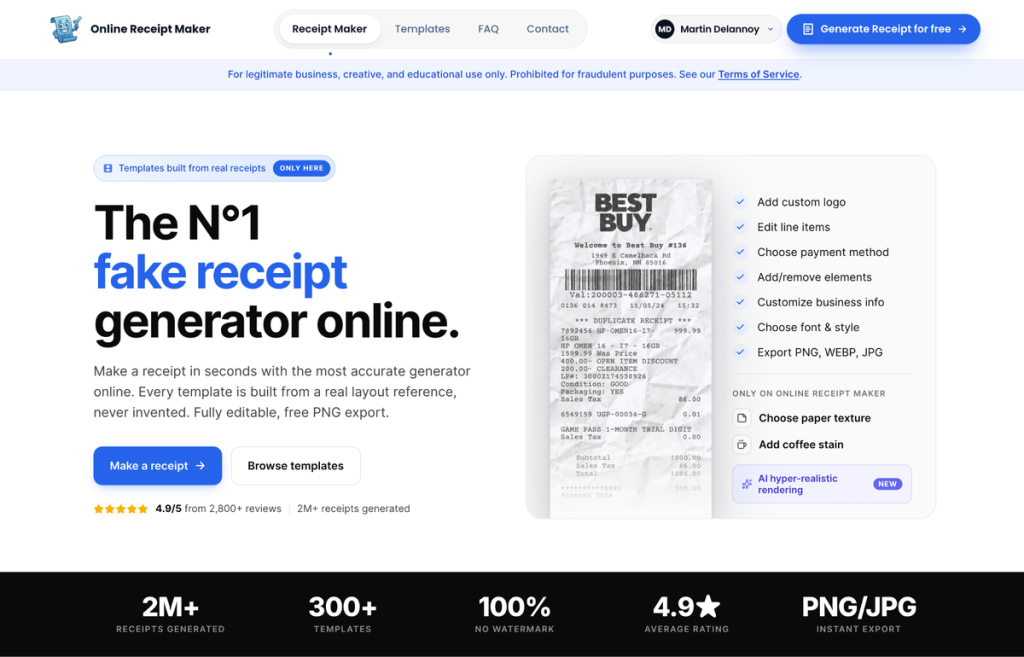
Online Receipt Maker is a strong pick for video work specifically, because the receipt has to survive being held up to a lens. The templates are reverse engineered from real layouts, so the typography and barcode hold up, and the realism extras matter here: paper texture, a coffee stain, a crease, and a rendering pass that mimics real printer ink all read far better on camera than a crisp flat print. Set the store, items and a total that makes your point, then export a clean image.
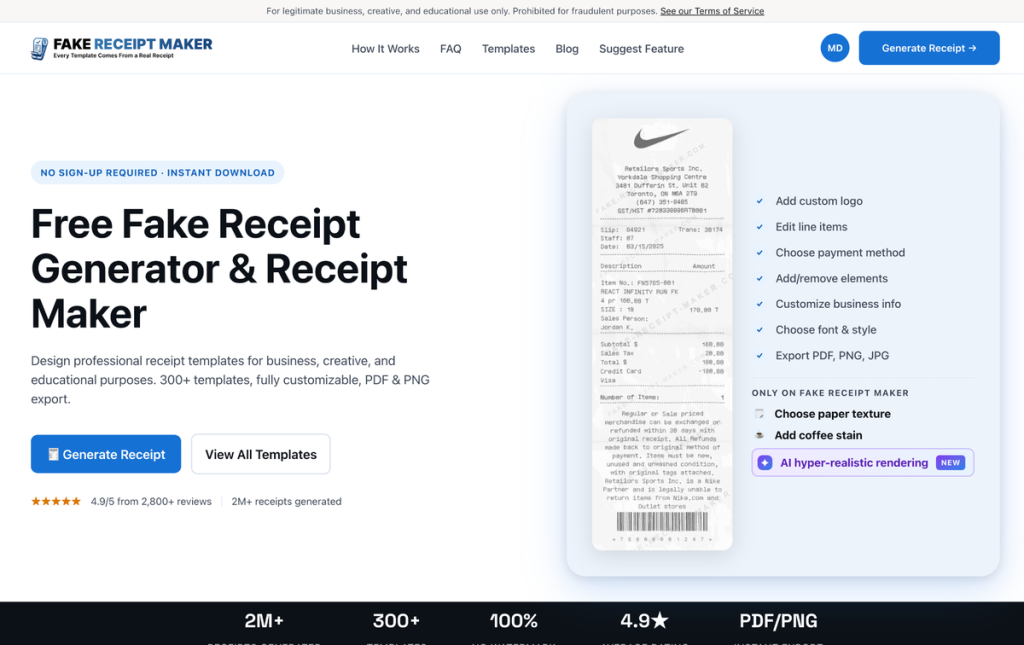
When you need several receipts for a series, a carousel or a set of thumbnails, Fake Receipt Maker is the quicker route, with a three step flow and no sign up to start. Spin up a few different ones and your content has variety instead of the same prop reused in every frame.
Making it read well on screen
Content has its own demands. Make the key number obvious and legible, since a thumbnail receipt has to communicate at a glance. Keep the totals reconciled, because viewers will pause and screenshot, and a wrong sum becomes a comment thread. Match the receipt to the story you are telling, so a video about overspending on takeout shows believable restaurant receipts rather than a random grocery slip. And age it a little for realism, because a slightly worn receipt held up to camera looks like a real one pulled from a pocket rather than a graphic.
Match it to the platform
Different platforms frame a receipt differently, and a quick thought about format saves rework. For a vertical video, a tall thermal receipt actually fits the frame beautifully, so hold it upright and let it fill the vertical space. For a thumbnail, the receipt needs to communicate at a glance, so keep the key number large and the surrounding clutter minimal. For a carousel or a static post, you have room for more detail, so a fuller receipt with realistic texture reads well. For a horizontal video, plan where the receipt sits in frame so it is legible without crowding you out. Thinking about the platform before you generate means the receipt looks intentional rather than awkwardly cropped or too small to read.
Stay authentic, stay anonymous
The quiet advantage for creators is privacy. Using generated receipts means your real spending, your bank, your card and your actual purchases never appear in a video that lives online forever. You get the storytelling power of a real receipt with none of the exposure, which is exactly the trade a sensible creator wants.
A note on legitimate use
Props for videos, posts, thumbnails and educational content are squarely legitimate uses, and both sites state their creative and educational positioning openly on their own pages. The boundary is simple: a receipt used as a prop or an illustration in your content is fine, while using a fabricated receipt to deceive someone in a real transaction is not, and both services prohibit it. Content creation sits well inside the lines.
Bottom line
Receipts are a natural storytelling device in content, but filming your real one means leaking your finances and faking one badly looks cheap. A fake receipt maker gives you a believable prop with invented numbers in a minute, with realism touches that hold up on camera and zero exposure of your own data. Build it around the story you are telling, keep it legible and reconciled, and it will read as the real thing while keeping your actual spending private. Build a small library of go to receipts for the topics you cover most, and you will always have a believable prop ready when an idea strikes, instead of pausing a shoot to fake one on the spot. Treating these props as reusable assets rather than one off images is the small habit that separates creators who move quickly from those who lose momentum fumbling for a believable receipt mid edit.