The “broke student” trope is becoming a dangerous financial reality in Australia. As of 2026, the landscape of higher education and personal finance has shifted significantly. While the Australian Government has introduced a fairer HELP repayment system—lifting the minimum repayment threshold to $67,000 for the 2025-26 financial year—the average student still faces a cost-of-living mountain. In cities like Sydney and Melbourne, monthly living expenses for a single student can easily soar between $2,800 and $4,200 when including the current rental climate.
Building wealth isn’t about having a six-figure salary immediately; it’s about strategic habits formed while you’re still hitting the books. If you are struggling to balance a part-time job with heavy coursework, you might consider professional online assignment help. For instance, many students choose to outsource specific tasks through expert services to ensure they maintain the high GPA required for competitive graduate roles without sacrificing their mental health or income-earning potential.
Here are five essential wealth-building habits every Aussie student should implement today to secure their financial future.
1. Master the “Bucket” Budgeting Method
The 50/30/20 rule is a classic, but for Australian students dealing with high rent, a “Bucket” system often works better. This involves automating your income into three distinct digital accounts:
- Blow Bucket: For daily expenses like your $6.00 oat flat white and Friday night drinks.
- Mojo Bucket: Your emergency fund (aim for $2,000 initially to cover sudden spikes in utility bills).
- Grow Bucket: For long-term investments.
By automating these transfers, you treat your savings like a non-negotiable bill.
2. Understand the Real Cost of Academic Failure
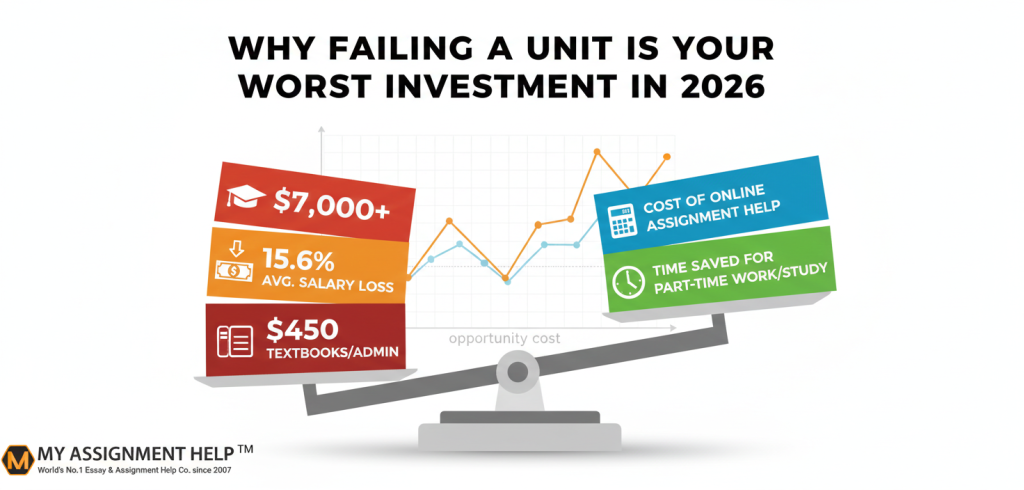
In 2026, the financial stakes of failing a unit are higher than ever. With undergraduate tuition fees for certain Business and Engineering degrees at top-tier universities hitting $45,000 to $60,000 per year, a single failed unit can cost you upwards of $7,000 in lost tuition and delayed graduation.
Beyond the direct costs, there is the “opportunity cost” of entering the workforce a year late. If you are pursuing a career in early childhood education, mastering the nuances of documentation is critical. Resources such as The Complete 2026 Guide to Observing Children can be a proactive way to understand the marking rubrics for units like CHCECE038 and avoid the massive financial hit of a “Fail” grade.
As the visual data above demonstrates, the ‘Risk’ side of the scale far outweighs the ‘Solution.’ Investing in professional support isn’t just about passing; it’s a strategic move to protect your future earning potential.
Employers also value soft skills alongside academic performance. Participating in workshops, networking activities, or corporate team building events can help students strengthen communication, leadership, and collaboration skills. These experiences not only prepare you for graduate recruitment but can also improve your confidence when working in professional environments after university.
3. Harness the Power of Compound Interest Early
Einstein reportedly called compound interest the “eighth wonder of the world.” For a 19-year-old student, time is your greatest asset.
- Example: If you invest just $50 a week into a low-cost index fund with an average 7% return, in 10 years you’d have approximately $36,000.
- Wait until you’re 29 to start the same habit? You’d need to invest significantly more to catch up to that same “snowball effect.”
4. Supercharge Your Superannuation
Most students view Super as “old person money,” but the 12% Super Guarantee (SG) paid by your employer is a vital part of your wealth.
- Consolidate: If you’ve had multiple part-time jobs (retail, hospitality, tutoring), you likely have multiple Super accounts charging multiple fees. Use myGov to consolidate them into one high-performing, low-fee fund.
- Check your statements: Ensure your employer is actually paying your Super. Wage theft is a real issue for young workers in Australia.
5. Leverage “Hidden” Student Concessions
Wealth building is as much about saving as it is about earning. In Australia, your student ID is a “discount goldmine” that can save you thousands annually:
- Transport: Concession Opal or Myki cards can save you up to 50% on travel.
- Software: Use your .edu.au email to get free access to Microsoft 365, Adobe Creative Cloud, and Canva Pro.
- Energy: Many providers offer “student move-in” deals—always ask for a discount.
Key Takeaways for Aussie Students
| Habit | Action Step | Estimated Annual Benefit |
| Budgeting | Set up 3 “Buckets” in your banking app. | Prevents $2,000+ in impulse spending. |
| Academic Success | Use professional resources to avoid failing. | Saves $7,000+ per unit in fees. |
| Compounding | Invest $20–$50/week in an index fund. | Long-term growth (tens of thousands). |
| Superannuation | Consolidate accounts via myGov. | Saves $100+ in annual fees. |
| Discounts | Always ask “Do you have a student price?” | Saves $1,500+ on tech/transport. |
FAQ: Navigating Student Finances in Australia
Q: When do I have to start paying back my HELP debt in 2026?
A: For the 2025-26 year, you only start making compulsory repayments once you earn above $67,000. The repayment is now based on a marginal system, meaning you only pay 15 cents for every dollar earned above that threshold (up to $125k).
Q: Is it better to pay off my HECS/HELP debt early or invest?
A: Since the government recently capped indexation to the lower of the CPI or Wage Price Index, HELP debt is “cheaper” than most loans. Many experts suggest investing excess cash into assets with higher returns (like ETFs) first.
Q: How much should I have in an emergency fund?
A: Aim for $2,000 or enough to cover one month of rent and groceries. This prevents you from turning to high-interest credit cards or “Buy Now Pay Later” services when your laptop breaks.
Data Sources & References:
- Australian Taxation Office (ATO): Study and training loan repayment thresholds and rates 2025–26.
- Department of Education: Making student repayments fairer – HELP debt changes 2025.
- Moneysmart.gov.au: Budgeting for students and compound interest guides.
- Tertiary Education Quality and Standards Agency (TEQSA): 2026 Student Cost of Living Analysis.
Author Bio:
Lachlan McKenzie is a Senior Academic Consultant at MyAssignmentHelp. With over 8 years of experience in the Australian tertiary education sector, Lachlan specializes in helping students bridge the gap between academic theory and professional practice. He is a passionate advocate for financial literacy among domestic and international students in Australia.