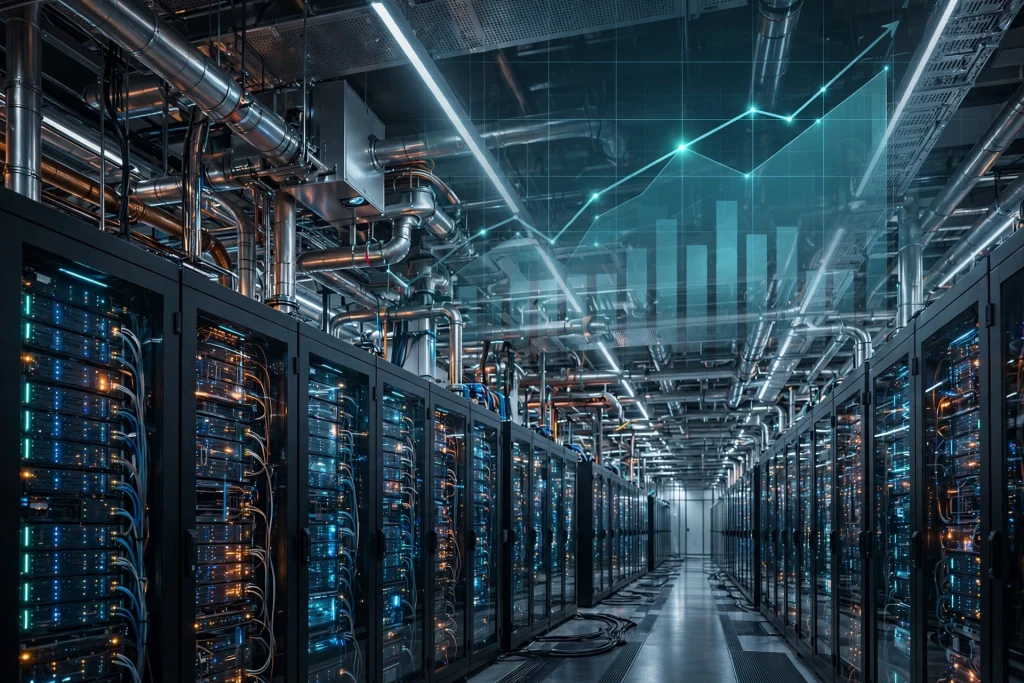
The artificial intelligence boom has produced some astonishing numbers, but the latest forecasts contain one that should make investors pause: spending on AI infrastructure is now projected to grow faster — and for longer — than the revenue the technology is expected to generate. In plain terms, the industry is building the factories at a pace its current sales do not yet justify, and the gap between the two curves is widening.
The Maths Behind the Concern
Data centres are the physical backbone of AI. Each new generation of models demands more computing power, more electricity, more cooling and more specialised chips, and the largest technology companies have responded with capital expenditure programmes measured in the tens of billions. Analysts tracking those programmes now warn that infrastructure spending forecasts are set to outstrip expected AI revenue, a point examined in detail in recent reporting on the AI investment gap.
None of this means the spending is wasted. Railways, broadband networks and cloud computing all went through periods where builders spent years ahead of proven demand, and the infrastructure eventually filled up. But investors are not railways barons with unlimited patience: listed companies must ultimately convert concrete, chips and electricity into cash flow, and the further spending runs ahead of revenue, the more heroic the assumptions baked into today’s valuations become.
Where the Money Is Actually Going
It helps to follow the money in layers. The first layer is the chipmakers and equipment suppliers selling the picks and shovels of the boom; they receive revenue today, regardless of whether end-user AI products succeed. The second layer is the cloud giants building the data centres, whose returns depend on renting out capacity at profitable prices for years. The third layer is the software and application companies, which must persuade businesses and consumers to pay enough for AI tools to justify everything beneath them.
Energy sits underneath all three layers. The International Energy Agency’s work on energy and artificial intelligence underlines how quickly data centre electricity demand is becoming a strategic issue for power grids, generators and governments. For investors, that makes utilities, grid equipment and power generation part of the AI trade too — often with steadier, more predictable cash flows than the headline technology names.
What History Says About Infrastructure Booms
Seasoned investors will recognise the pattern. In every major infrastructure cycle, the builders tend to overbuild at the peak, early investors in overcapacity get hurt, and the long-term winners are often the companies that bought or used the infrastructure cheaply afterwards. The dot-com era left behind dark fibre networks that later powered the streaming age. The lesson is not to avoid AI exposure altogether; it is to be honest about which part of the value chain you own, what you paid for it, and how long the cash flows will take to arrive.
There is also a timing question. Businesses are adopting AI tools quickly, but paying for them cautiously. Productivity gains are real in areas such as customer support, software development and document processing, yet many organisations are still running pilots rather than signing the kind of contracts that would close the revenue gap at the speed builders are spending. If adoption revenue accelerates, today’s spending will look visionary. If it does not, depreciation charges on vast fleets of ageing chips will arrive on income statements whether the revenue does or not.
What Investors Should Watch From Here
Rather than trying to call the top of the boom, investors can watch a handful of practical signals. Are cloud providers still raising capital expenditure guidance faster than revenue guidance? Are data centre power costs rising, squeezing margins? Are enterprise customers renewing AI contracts at higher values, or quietly cutting seats? And are the chip suppliers’ order books diversifying beyond a small group of giant buyers?
Diversification remains the simplest protection. A portfolio that mixes AI beneficiaries with steadier income-producing paper investments is less hostage to any single forecast. Regular, staged investing also helps: buying in tranches through a cycle avoids betting everything on one quarter’s guidance. Our recent look at the technology behind a more reliable content strategy touches on a related theme — in technology, durable systems tend to beat hopeful ones.
The Bottom Line
The AI spending race is not a bubble verdict; it is a maths problem. Infrastructure forecasts now assume revenue that has not yet been earned, by customers who have not yet committed to paying it. That gap may close — technology adoption has embarrassed sceptics before — but prudent investors should size their exposure for the possibility that it closes slowly. In a gold rush, the surest money is rarely made by whoever digs fastest. It is made by whoever financed the digging on sensible terms.