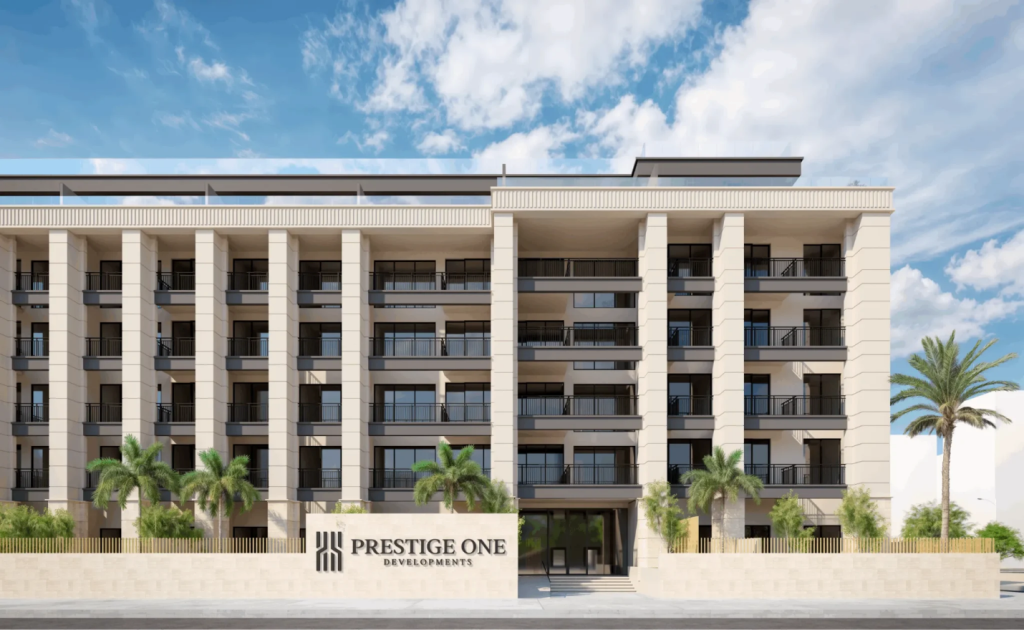
Capital always flows to where it is treated best. Right now, for a growing segment of European investors, traditional domestic markets are treating capital rather poorly.
Between aggressive inflation, stagnant economic growth across the Eurozone, and increasingly punitive tax regimes aimed at property owners, the classic European real estate portfolio is losing its luster. Net yields in major hubs like Amsterdam, Paris, and Frankfurt are frequently compressed below 3%. When adjusted for inflation, these “safe” investments are actually eroding wealth.
Consequently, we are witnessing a significant reallocation of private European wealth. The target is the United Arab Emirates, specifically the Dubai property market. However, this influx of capital isn’t driven by the desire for a sunny vacation home; it is a calculated, numbers-driven strategy focused on wealth preservation, tax efficiency, and the unique leverage offered by Dubai off-plan real estate.
Let’s break down the macroeconomic factors and financial mechanics that make the UAE an indispensable hedge for the modern European portfolio.
The Yield Differential: A Tale of Two Markets
To understand the capital flight from Europe to the UAE, you simply have to look at the yield spread.
In the Netherlands or Germany, a residential property investor is fighting a multi-front war. High acquisition costs, heavy stamp duties, escalating maintenance costs, and steep income taxes on rental revenue decimate gross returns.
Dubai operates on an entirely different fiscal model. The emirate consistently posts gross rental yields between 6% and 9% across its prime residential sectors. More importantly, the UAE does not levy personal income tax on rental yields, nor does it tax capital gains upon the sale of the asset. The gross yield is effectively the net yield (minus standard, predictable service charges).
For a wealth manager analyzing an asset sheet, replacing an underperforming 3% taxed European asset with an 8% tax-free Dubai asset fundamentally alters the trajectory of a portfolio’s compounding growth.
The Mechanics of Off-Plan Leverage
While the ready-property market in Dubai is highly active, sophisticated capital is disproportionately targeting the “off-plan” sector—properties purchased directly from developers prior to or during construction.
From a purely financial perspective, off-plan investing is an exercise in zero-interest leverage.
Developers in Dubai incentivize early buyers with aggressive payment plans. An investor might secure a premium asset by paying just 10% to 20% upfront, with the remaining balance spread over the construction period (typically 2 to 4 years), and a significant balloon payment due only upon handover.
This structure allows investors to lock in today’s asset price while keeping the majority of their capital liquid and deployed elsewhere. As the project nears completion, the asset typically appreciates in value. By the time the property is handed over, the investor has often realized significant capital gains based on the total value of the property, despite having only committed a fraction of the cash.
Currency Pegging: The Hidden Wealth Preserver
Currency risk is a primary concern when investing internationally. One of the least discussed, yet most critical, financial advantages of the Dubai market is its currency stability.
The UAE Dirham (AED) has been firmly pegged to the US Dollar (USD) at a rate of 3.67 since 1997. For European investors holding Euros (EUR), purchasing real estate in Dubai effectively means dollarizing a portion of their portfolio. In times of geopolitical instability or when the Euro weakens against the Dollar, holding USD-pegged hard assets acts as a powerful macroeconomic hedge, preserving purchasing power on a global scale.
The Golden Visa as a Financial Instrument
The UAE’s Golden Visa program is often marketed as a lifestyle perk, but for high-net-worth Europeans, it is a potent financial tool.
By investing a minimum of AED 2 million (roughly €500,000) in local real estate—including off-plan properties—investors can secure a 10-year, renewable residency visa for themselves and their immediate family. This decoupling of residency from local employment allows European investors to establish tax residency in a zero-income-tax jurisdiction.
In an era where European nations are aggressively expanding their tax nets, the Golden Visa provides a legal, transparent pathway to optimized personal and corporate tax structuring.
Risk Mitigation in a High-Velocity Market
No high-yield environment is without risk, and Dubai is a fast-paced, highly dynamic market. The primary risk in off-plan investing is developer non-delivery or project delays.
The Dubai government has implemented stringent regulatory frameworks to mitigate this. Chief among them is the escrow law. Developer funds are heavily regulated; buyers pay directly into a government-approved escrow account, and funds are only released to the developer as verified construction milestones are hit.
However, regulatory safety nets are not a substitute for rigorous due diligence. The most successful European investors do not navigate this market blindly. They rely on specialized advisory firms that bridge the gap between European investment standards and local market realities.
Firms such as AION Dubai have become essential partners for Dutch and European capital. Because they operate with a deep understanding of both the European regulatory landscape and the intricacies of UAE master developers, they provide the critical, on-the-ground intelligence needed to identify tier-one off-plan projects and avoid over-hyped developments.
The Verdict on Capital Allocation
The shift of European capital into Dubai is not a temporary trend; it is a structural realignment of global wealth.
As long as European markets continue to offer low yields and high tax burdens, the mathematical logic of Dubai’s tax-free, high-yield, and USD-pegged real estate market will remain undeniable. For the strategic investor, allocating capital to Dubai off-plan real estate is no longer considered an alternative investment—it is a core requirement for a resilient, modern portfolio.
FAQ
Q1: How do off-plan payment plans typically work in Dubai? Payment plans vary by developer but usually follow a structure like 20% on booking, 40% spread over the construction phase, and 40% upon completion/handover. This allows investors to leverage their capital without taking on traditional bank debt.
Q2: What happens if a developer fails to complete an off-plan project? The Dubai Real Estate Regulatory Agency (RERA) mandates that all investor payments go into a secure escrow account, not directly to the developer. If a project is cancelled, the law dictates that the funds in the escrow account must be refunded to the investors.
Q3: Is there a capital gains tax when selling an investment property in Dubai? No. The UAE does not impose capital gains tax on the sale of real estate, allowing investors to retain 100% of their property’s appreciation.
Q4: Can foreign investors easily repatriate their rental income and profits? Yes. The UAE has no currency controls or restrictions on the repatriation of funds. Investors can freely transfer their rental income and sale profits back to Europe or anywhere else in the world.