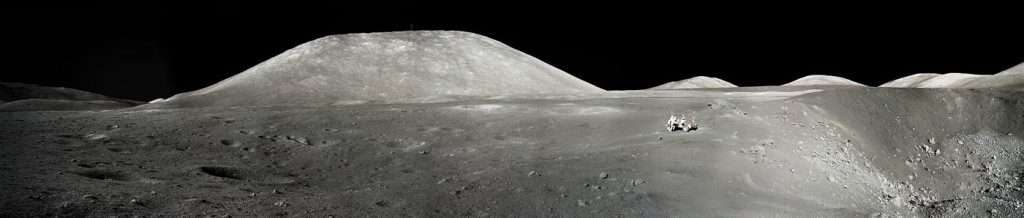
NASA is preparing to send a nuclear-powered rover to the Moon’s south pole, one of the most challenging and scientifically prized destinations in the solar system. The six-wheeled PROMISE rover, announced at the MAX POWER exposition at Kennedy Space Center on 7 November, will be delivered by Blue Origin under a 94 million dollar base award, with a 140 million dollar performance option. Unlike solar-powered rovers, which shut down during the two-week lunar night, a nuclear power source lets PROMISE keep working through darkness and inside permanently shadowed craters. Its mission is to explore terrain where water ice is believed to lie frozen in the soil, and to test the technologies a future Moon base will depend on. The award is part of a much larger lunar infrastructure programme, with NASA selecting eight companies for a Commercial Lunar Payload Services follow-on worth up to 10 billion dollars over ten years.
What the Evidence Shows
The south pole matters because its water ice could become drinking water, breathable oxygen and even rocket propellant for crews working on the Moon. Extracting it would cut the cost of lunar operations enormously, since every kilogram lifted from Earth is expensive. PROMISE will map ice deposits, test drilling and sampling tools, and measure radiation and temperature extremes that future habitats must withstand. The mission also fits into NASA’s wider Moon Base contracting effort, which includes six task orders worth about 1.3 billion dollars for moving cargo to the surface. If the rover succeeds, it will show that nuclear power can keep machines alive in the coldest, darkest corners of the Moon, clearing the way for a sustained human presence there. Reporting and analysis from sources such as NASA track the same developments, and specialists following the nuclear-powered rover heading for the Moon say the direction is now consistent across independent lines of evidence.
The Wider Context
Funding bodies are watching the nuclear-powered rover heading for the Moon closely because the work sits at the junction of basic curiosity and practical return. Grant panels increasingly ask for a path from discovery to application, while researchers push back that the most valuable uses of fundamental science are rarely the ones written into the original proposal. The tension is productive when both sides stay honest about timescales.
What Happens Next
The long view on the nuclear-powered rover heading for the Moon is that fields advance by accumulation rather than by single announcements. This result adds a solid, checkable piece to a structure many teams are building, and its authors have shared their data so the piece can be tested from every side. That is how the picture eventually becomes reliable enough to act on. You can follow related developments in our coverage of science.
It is also worth remembering how quickly the picture in this area has changed before. Positions that looked settled a few years ago have been revised as new data arrived, and the same humility is appropriate now. The strongest coverage of this subject, and the most useful advice, tends to come from sources that update their views openly when the facts move, rather than defending an earlier position long after it has stopped fitting the evidence available.