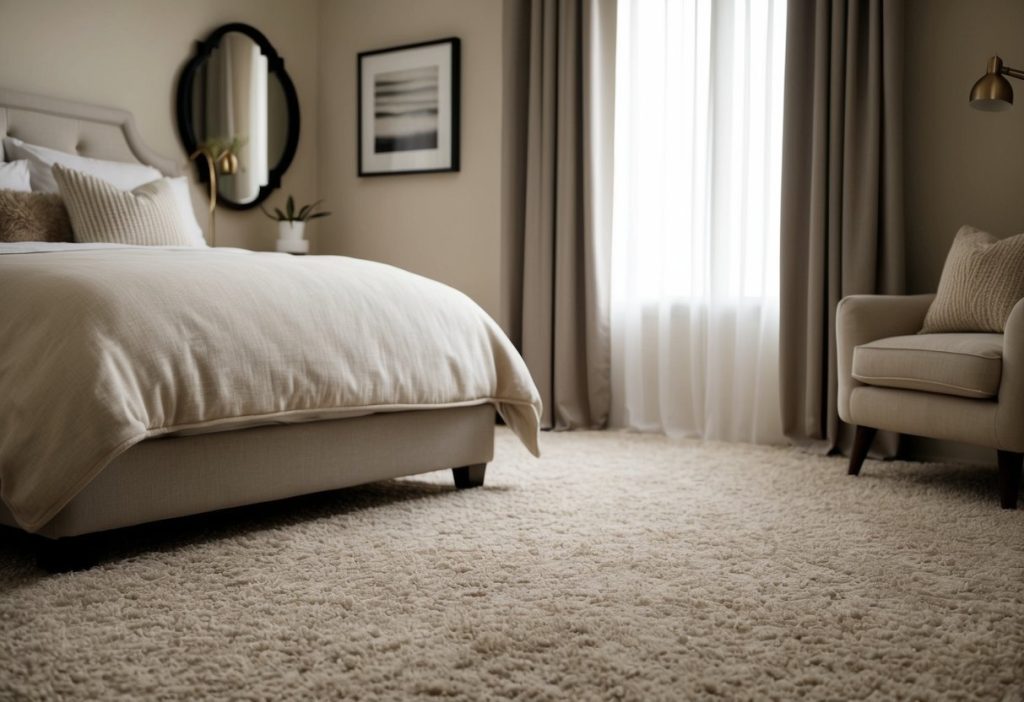
Two carpets can share a colour and a price tag yet feel completely different underfoot, and the reason is almost always the pile. Pile describes how the fibres are constructed and finished, and it decides softness, durability, maintenance, and even how a carpet deals with the flattened tracks that appear in busy rooms. Understanding the main types turns a confusing showroom visit into a confident decision.
Before comparing samples, be honest about how the room is used. A guest room slept in twice a month can carry the most delicate Bedroom carpet on the market, while a family bedroom with children, pets, and a dressing routine needs a construction that shrugs off daily traffic. Matching the pile to the workload is the single most reliable way to avoid disappointment later.
Plush and saxony: the luxury end
Plush, sometimes called velvet, carpet has a smooth, even surface with fibres cut to a uniform height. It looks elegant and feels silky, which is why it suits formal main bedrooms. Its weakness is honesty: it shows every footprint and vacuum stroke, and shading marks appear where the pile leans in different directions. Saxony piles are slightly longer and denser, giving a richer feel, but they share the same tendency to show traffic patterns.
If your heart is set on that luxurious finish, choose a mid-tone colour with a slight fleck, which disguises shading far better than a solid pale shade. Reserve these piles for bedrooms where shoes come off at the door and the bed is not doubling as a homework desk or play space.
Twist pile: the family workhorse
Twist carpet is made by twisting the yarn tightly before tufting, which gives each tuft resilience and a slightly textured, matte appearance. It springs back after footsteps, hides marks well, and copes gracefully with the daily route from door to wardrobe to bed. For most family bedrooms it offers the best balance of comfort, appearance, and price, which is why it dominates mid-range ranges in almost every showroom.
Loop pile: durable but different
Loop pile leaves the yarn uncut, forming rows of small loops. It is exceptionally hard-wearing and gives a more tailored, contemporary look. The trade-offs are a firmer feel underfoot and a vulnerability to snagging, which makes it a poor match for homes where cat claws or pet nails are part of life. In a calm adult bedroom or a smart guest room, though, a fine loop can look superb and last for many years.
Fibres: wool, nylon, polyester, and blends
Wool remains the benchmark for natural resilience and comfort. Its fibres bend and recover, it resists soiling better than expected, and it helps moderate humidity in the room. The cost is higher, and pure wool needs prompt attention to spills. Nylon is the toughest synthetic, excellent at resisting wear and recovering from compression, while polyester offers softness and strong stain resistance at a friendly price, though it flattens sooner under heavy use. Blends, commonly eighty per cent wool with twenty per cent nylon, aim to combine natural feel with synthetic toughness.
Whichever fibre you choose, the underlay deserves equal attention. A dense, cushioned underlay protects the pile from the impact of footsteps, adds warmth and quiet, and can noticeably extend the life of a mid-priced Bedroom carpet. Spending a little more beneath the carpet often delivers more benefit than spending the same amount on a marginally better carpet laid over tired, thin underlay.
Measuring, fitting, and settling in
Measure carefully, or better, let the retailer measure for you, because bedroom alcoves, bay windows, and fitted wardrobes create offcuts and joins that affect the final cost. Ask where joins will fall and keep them away from the main walking lines where possible. Professional fitting with properly stretched carpet prevents the ripples and early wear that spoil an otherwise good purchase.
Reading the specifications like a professional
Beyond pile type, a few numbers on the label repay attention. Pile weight and density tell you how much fibre is packed into each square metre; denser carpets generally resist flattening better and feel more substantial underfoot. The tog rating matters if you have underfloor heating, because carpet and underlay together must stay below the heating manufacturer's limit for the system to work efficiently. Ask for these figures rather than relying on thickness alone, since a tall, loosely packed pile can feel impressive in the hand yet compress quickly in use.
Guarantees offer another clue to quality. Wear warranties of ten years or more, and stain guarantees on synthetic ranges, signal that the manufacturer expects the product to perform. Keep the paperwork, note the batch number of your carpet, and register the guarantee if the maker asks you to. None of this is glamorous, but buying flooring well is mostly a matter of these quiet details being right.
Once fitted, expect a new carpet to shed loose fibres for the first few weeks; gentle vacuuming without a beater bar at first is usually recommended. Keep offcuts, because they make excellent mats for the doorway and can serve for invisible repairs years later. Choose the pile that matches your household honestly, and your bedroom floor will stay comfortable and good-looking far longer.